


Book Selection in the Age of Data
The hidden system behind our reading habits
Did you really choose the book you’re currently reading? Think about the book you’re currently focusing on. What was the main reason you chose it? Were you the one who made the decision, or might this choice have been imposed on you without your realising it? I would like to explore this issue, which is evident in a significant proportion of artistic works, by examining it through the lens of literature. Let us discuss the overt or covert factors that influence our reading choices.
Throughout this essay, I will bear in mind that I am not here to tell you what is right or wrong. You can decide for yourselves regarding the factors I have mentioned. The choice is yours.
Let us begin with that well-known saying: “There are so many books to read, yet our lives are so limited.” Today, we might add: There are so many books to buy, yet our financial means are just as limited.
Consequently, we are forced to make choices. All the works we consume (audio, visual and textual) come at a cost, not only financial, but also in terms of time, which is an irreversible commodity. In other words, they are costly. At this point, choices and preferences become inevitable, but what really matters is how we make them.
Let's consider the decision-making process that you have probably experienced to some extent and which now feels a bit outdated.
We would visit bookshops or second-hand ones and spend time indulging our love of literature and passion for books. We would browse through many books, perhaps being drawn to another shelf by a passing remark. We would ask shop assistants for help, share in a friend’s excitement, and lose ourselves among the vivid or faded colours of the book covers. Sometimes, we would go treasure-hunting in the nooks and crannies. At other times, we would have a particular book in mind; one we had heard about or that had caught our eye in an advertisement or flashy display of a newly released edition. At other times, we would prefer to get lost in that sea of paper, saying, “Whatever comes our way is our lot”. We loved surprises.
Much of what we’ve described may now sound nostalgic. There are many reasons for this, such as the rising cost of physical sales, the ubiquity of advertising, and the dominance of the digital landscape. Yet we are gradually forgetting that feeling. To be honest, I now hesitate to go into bookshops either. Every now and then, I pop in just to catch my breath and inhale the scent of paper before dashing out again. People say that it has lost its old spirit, and it really does seem to have taken on that air. Still, I’m not judging; I’m just stating what I see.
We are experiencing a decline in physical contact with books, as well as a gradual weakening of human interaction with them, such as touching and empathising. Consequently, our tangible choices are slowly slipping from our grasp. We have become accustomed to the convenience, variety and ease of choice that technology offers us. But is this digital acceptance really happening of its own accord?
We know that everything is archived online. Remember the term “Big Data” that we used to hear so often? This is where it comes into play. Everything purchased, or with the potential to be purchased, is recorded and categorised over time. We are more or less aware of how social media algorithms work on the surface. When all this data is brought together, it shows us things that we like or might like. In short, art is now both measured and produced according to these metrics. Consequently, the focus shifts away from choice and art itself.
This is where the concept of advertising comes into play. Advertising has always existed, but never before has it been thrust so forcefully in our faces. Unlike radio or television adverts, which are less popular than they once were, they can appear at any moment and from anywhere in our internet-dependent world. We would, of course, largely be spared them if we didn't have an online connection, but we shouldn't overlook the adverts on physical products either. After all, it is safe to assume that the more we see and use them, the more they seep into our subconscious.
As if official advertisements released by product manufacturers were not enough, individual advertisements by 'content creators' on social media have also emerged. On these platforms, where people's digital identities are formed, disconnecting from the online world is akin to dying. Local promoters are branching out across the hierarchy.
"All the world's a stage," wrote Shakespeare. I find this both accurate and incomplete. By “stage”, he meant that humanity is part of this artificial world (this simulation) in which we play our roles, and that is true. However, if he were alive today, in a world where advertising has infiltrated life to such an extent, he would not have been content with that statement. We are all on the stage, but we all want the spotlight to shine on us. Even the extras, who make up the vast majority of the play, claim that this is already happening. It's a kind of modern psychological illness, but I won't elaborate further so as not to stray from the subject.

“We’ve lost touch with the physical world, become hooked on the digital realm and turned into advertising slaves.” You might be asking, “What other factors could be influencing our choices?” Let's take a look together.
Have you ever read a book and then wanted to read more by the same author? I think we often overlook the fact that this feeling is much more satisfying than an average reading experience. It's quite valuable. After all, not knowing where we stand in the vast world of authors and books is a common situation. Let me explain why I felt the need to mention this.
Inevitably, the topic will lead to digital and social media. No matter how bored we are by them, how much we try to ignore them or how much we don't want to hear about them, they permeate every aspect of our lives and are the new reality. It's hard not to consider how strange this situation appears to an outsider.
I won't prolong this. The topic is recommendations. The platforms on which they can be found.
You’re all familiar with the IMDb website. It's supposed to be a reliable source where we can rate the best films. Yes, it being open to the public can be a good thing, provided you’re not influenced by existing ratings. However, the problem lies not so much in the ratings themselves, but in people believing in their power. Take a look at the best films, for example. As we all know, “The Shawshank Redemption” is at the very top. It's important to emphasise the word now. Before IMDb existed, how many of us had even heard of this film, let alone considered it to be the best? Would we have thought it could be the best film? The problem is that we apply a similar mindset to classic works of literature, where the selection process is arguably more logical. This influences our perceptions. Consequently, even decades later, certain films continue to dominate and remain at the top. Those below are either crushed or fail to reach the positions they deserve. Whether we like it or not, we are all responsible for this.
Now, let's take a similar approach to the literary aspect. With more people reading and buying books nowadays, (as I mentioned in one of my articles, book sales have indeed risen, although the impact of social media is, of course, difficult to measure) are there platforms influencing this trend? You probably use local and global sites yourself. I use them too. It's easy to see how the same logic we mentioned earlier might be at play here, too. Moreover, there is greater textual interaction on these sites. Reviews, ratings, quotes and posts can create a more memorable and engaging (or, conversely, off-putting) effect.
Our interest in them is undoubtedly directly proportional to our desire to stand out on social media. We all use these platforms to share aspects of our personalities, even if we are not particularly concerned with self-promotion or “making a splash”. Even if they merely serve as an archive, they ultimately fulfil this purpose because, willy-nilly, we are all contributing to a shared data pool.
Consequently, questions such as “How many people read it?” and “How popular was it?” arise. Quantity takes precedence over quality. Sales figures and the number of reviews have the final say, not quality.
The idea of which book or author might appeal to us or be worth including in our selection naturally takes a back seat to reviews, stars, ratings and so on. Before making a purchase or setting aside time to read, it can be helpful to seek the opinions of people whose literary tastes we think are similar to our own. This isn't a requirement, but it can offer some insight. So what’s the problem? Becoming too attached to reviews.
Let's say we have two friends who have reviewed a book and we value their opinions equally. They’ve given conflicting reviews. How should we proceed?
“Oh dear, do I have to choose? Please don’t leave it up to me!”
In short, things are becoming increasingly analytical.
We see adverts based on our performance data and come across promotions and bestsellers. We also learn authors' names. As we said, we are fuelling this ourselves. It's just like buying products from companies that we initially thought should be boycotted. After a while, we no longer think twice about it. In the long run, our principles become imbalanced, and we find ourselves becoming curious about the books that everyone else has read. This is not because we want to, but because we have fallen into the mindset that “if everyone’s read it, it must be good”. I’m certainly not saying that popular books should be ignored outright. If you like them, read them. However, acting on a social impulse that isn't our own means we're unable to make our own decisions. Indecision can sometimes lead us to make our own decisions.
Where there is data, there is production. As production increases, so does the volume of data. It is a self-perpetuating cycle. But are there not those who benefit from this structure? I'm not just talking about publishing houses or social media accounts that earn money through promotion. In my view, authors are also capitalising on this trend, particularly those who can predict its direction and exploit it.
It's fair to say that narratives that play it safe and stick to the average are becoming increasingly common. These are old stories in new guises. Thanks to the hype generated by publishers, these stories suddenly become famous through advertisements, interviews, and book signings. You may be able to think of such writers or books. Stories that feel familiar but leave no lasting impression. Writers and works that are claimed to be pioneers of a certain genre, said to have caused a sensation; yet when their work is read, it resembles that of others and fails to convey the much-discussed flavour. In fact, it may even be below average. Will these truly achieve more than a stream of high likes on social media posts?
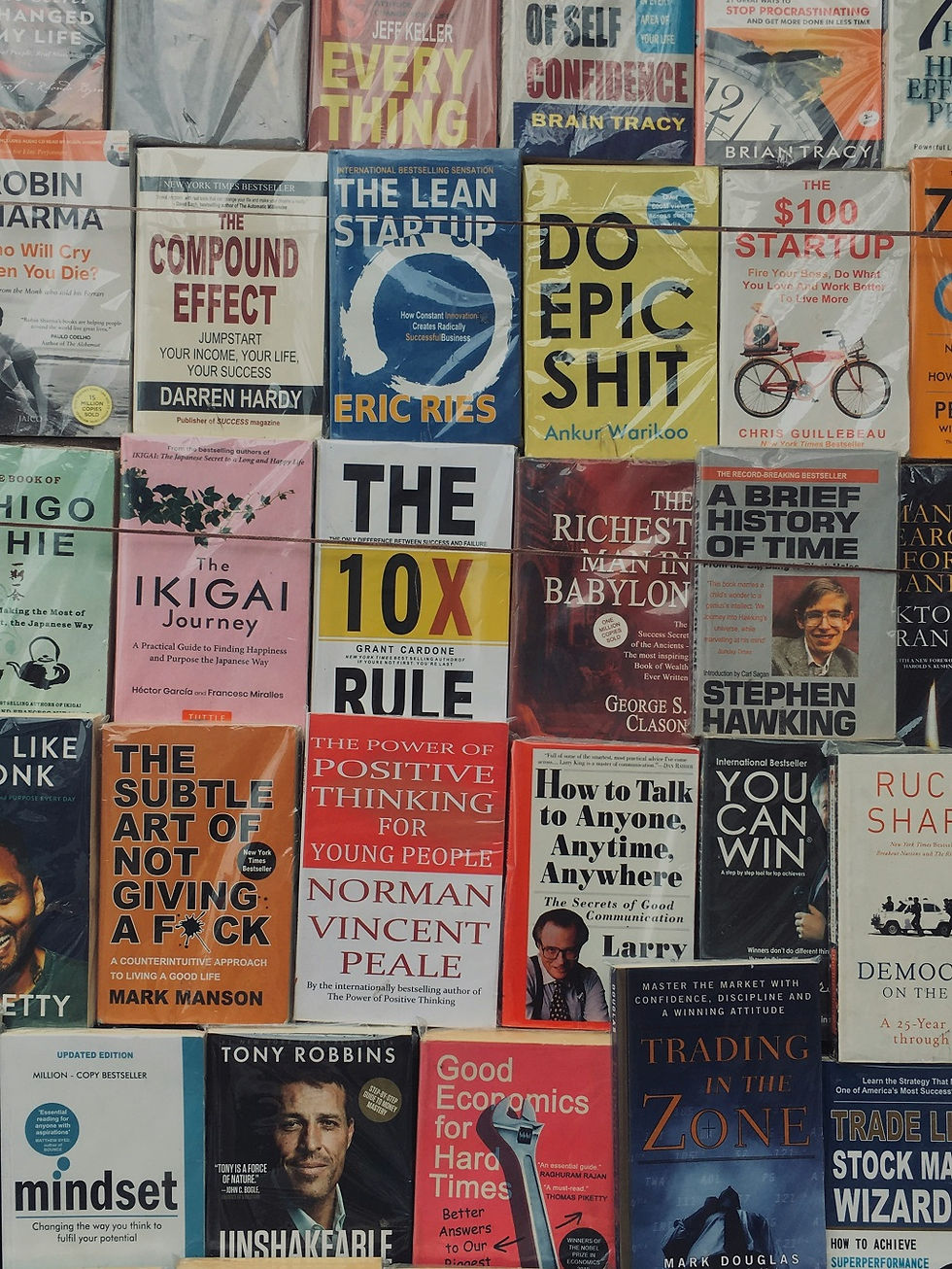
There is a problem, and it is plain to see. However, individuals have always been powerless against the system, and no change will come about unless we make collective decisions, address the root of the problem, and take a firm stand. If you ask me whether I think this will happen, I very much doubt it. It is up to us to recognise the right opportunities on this unpredictable journey. As with everything else, we must be conscious consumers, considering not only our physical needs but our artistic ones too.
The choice is ours. While flashy covers may be pleasing to the eye, it is the content that matters. Not every high rating reflects who we are. We must ignore those who pretend to be influenced. It's important to act without getting too caught up in advertisements.
But we can't help asking: if they can predict what we'll love in advance, do the things we love still belong to us?


Comments