


On the Boundaries of the Right to Read
The difference between rejecting a book and never being able to read it at all
“Banned Books Week” is taking place from 4 to 10 October. Established by the American Library Association in 1982, the event provides an opportunity to reflect on book censorship and freedom of reading. The theme for this year is “Let Books Be. Protect the Freedom to Read”. To coincide with the ALA's 150th anniversary, a list of the 150 most frequently challenged books from 1990 to 2025 has also been published. Alongside contemporary titles, the list features works that have secured their place in literary history, including “To Kill a Mockingbird” and “Of Mice and Men”.
When I consider this issue, I wonder why a book would be banned. However, upon further reflection, I began to question what exactly is prohibited by banning a book: the book itself, the ideas within it, or our very possibility of encountering those ideas?
Banning a book does not change the text itself. The sentences on its pages remain in the same place, its characters continue to experience the same events, and the author's ideas do not disappear. What changes is how we can access the book. When we learn that a book has been banned, we inevitably wonder why.
Thus, the word “banned” can alter our perception of a book. We may take an interest in a book that would normally hold no appeal for us once we learn that it has been banned. It is hardly surprising that things which are unavailable, difficult to access, or deemed inappropriate for discussion should catch our attention. But does being curious about a book simply because it has been banned mean that it is actually good or important? Of course not. The fact that a book has been banned does not automatically make it a fine work of literature, a champion of sound ideas, or a masterpiece that must be read. Conversely, we could also argue in favour of reading a book that we deem poor.
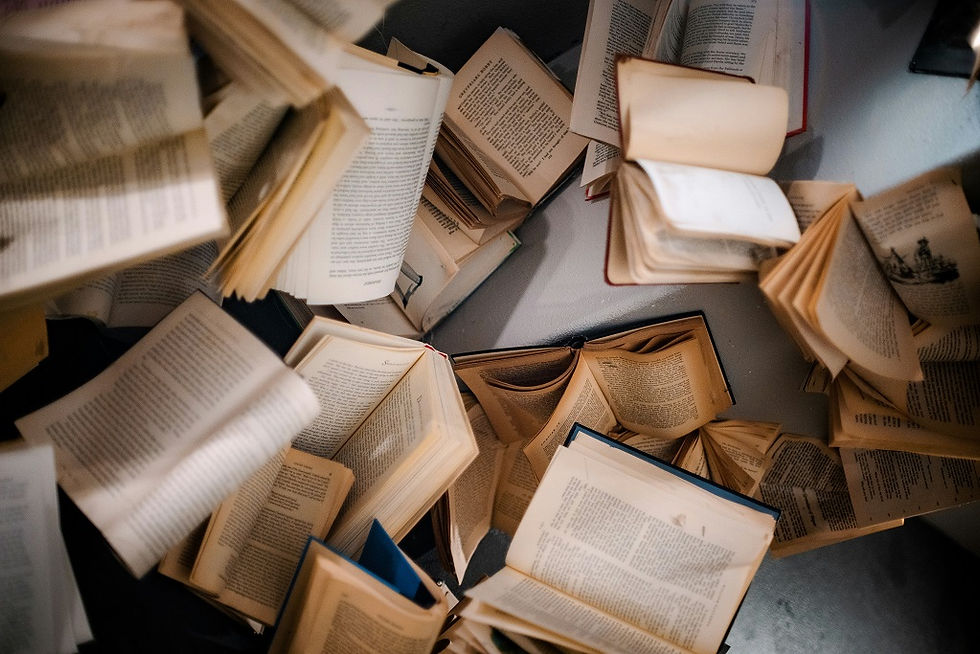
Defending the right to read a book does not mean defending its content. We may disagree with a text, find it nonsensical or offensive, or choose not to recommend it. These are all decisions we can make as readers. However, if the book is removed, our ability to make such decisions is also taken away. The problem with bans is that they disregard the reader’s freedom of choice. Should we not have the opportunity to read a book just so that we can decide whether we like it or not?
This is why “Which books have been banned?” is an inadequate question with which to approach the issue of banned books. The banning of a book is a far broader issue than just its content. It means that others are deciding which books readers may encounter and what they may or may not read. Of course, when children are concerned, separate issues need to be discussed, such as age appropriateness, the educational environment and parental responsibility. I value these considerations, and, frankly, I believe I could be even more cautious when considering my own perspective. However, this is not the same as removing a book from circulation simply because of the ideas it contains. Whether we choose to stop reading a book, refrain from recommending it, or criticise it is up to us. When someone else makes a decision on our behalf, however, that is a different matter altogether. When it comes to children, it is understandable that parents make choices on their behalf, as children cannot be expected to assess content in the same way.
For this reason, when referring to “banned books”, it is important not to consider only those that have been removed from shelves. Situations such as the confiscation of a book, the prevention of its sale, restrictions on access to it, or its investigation also fall within the scope of this discussion. Consequently, the issue itself becomes more apparent in the absence of a definitive list. Where exactly does the boundary begin that prevents a book from reaching its readers?
Of course, not every restriction on books should be viewed as a direct ban. An age limit, a content warning, or a decision made by a parent on behalf of their child are one thing, but removing a work from public access is quite another. In the former cases, the work is not entirely removed, leaving readers or parents to assess and make their own choices. They can decide, based on their own judgement, whether or not to read the work in question. Undoubtedly, we also need to give further thought to the limits of this. For example, making a publication that explicitly promotes terrorism or incites violence available to all without conditions is different from removing a novel from circulation simply because it contains disturbing ideas. The state preventing the dissemination of such content is different from documenting its existence, how it is disseminated and the grounds on which it is restricted. Of course, forcing the distribution of a work, dictating what people must read or imposing it on them are indefensible practices. The important thing is to assess each situation individually and not unnecessarily eliminate the reader’s freedom of choice.
Perhaps “Banned Books Week” reminds us of one simple fact: reading is not just about accessing the things we love. It also involves the possibility of encountering things we dislike, disagree with or find objectionable. Safeguarding the freedom of a book also means protecting this possibility. Although we can choose whether to read a book or not, being unable to read it at all is a decision made by someone else.

Comments